A TRIBUTE TO CHUCK DERBY RUNNING ELK

& ED McGAA EAGLE MAN

Sacredhoop Mag Cover


It was with deep sadness that I learnt of Ed McGaa’s passing. And of Chuck Derby Running Elk, leader of the Sisseton Dakota Sioux, who passed several years ago now, but he is only a breath of sage away. They were good friends. And they both, with great wisdom and limitless compassion, held a pivotal role in my life.

I was, and am, a washichu, a white woman learning Native American spirituality and walking that Red Road, the best way I can. And I have been so blessed in being gifted the best teachers, wise men, who taught with true humility and with ancient wisdom within their hearts.

I met Ed McGaa Eagle Man first, here in Britain. He called us all - all the people who worked with him, wherever we met him - ‘the rainbow tribe,’ and he welcomed us and taught us. I owe so much to Eagle Man. He gave me my Lakota name in ceremony, and I had lucid dreams about him before we ever met physically. He honoured those dreams in circle, with drum and chant, and that is an enduring memory.  Ed had a dry, gentle sense of humour, which would leave us in stitches. He loved our, sometimes crazy, British place names, and because he thought them so weird, he would indulge in wordplay that got crazier by the minute. He was also half-Scottish and would sometimes spend lunch breaks with his head inside books about Celtic traditions. We got on well, as I am half Scots too, from the Harper clan in Stirlingshire.

Jan with Ed McGaa
                Eagle-Man
Ed met with some resistance from some traditional Oglala, because he clearly saw, and believed utterly in the vision of the Oglala holy man Nicholas Black Elk, of ‘Black Elk Speaks’ fame.

Nicholas Black Elk saw the great ‘Flowering Tree’ - the ‘rainbow tree’ - the resurgence of his people’s spirituality, which was so under attack by the ‘men in blue’ at that time. He saw further than anyone, visioning that people of all colours, all races, would meet under that Flowering Tree to learn the old wisdom again.


I was an art teacher in a Middle School on the Isle of Wight, just off the south coast of England. Both of those facts were pivotal, as art - being a Cinderella subject - did not get inspected very much; and being a middle school, the children were young enough to not be under exam pressure. When Native American culture came into the National Curriculum, it was my green light.

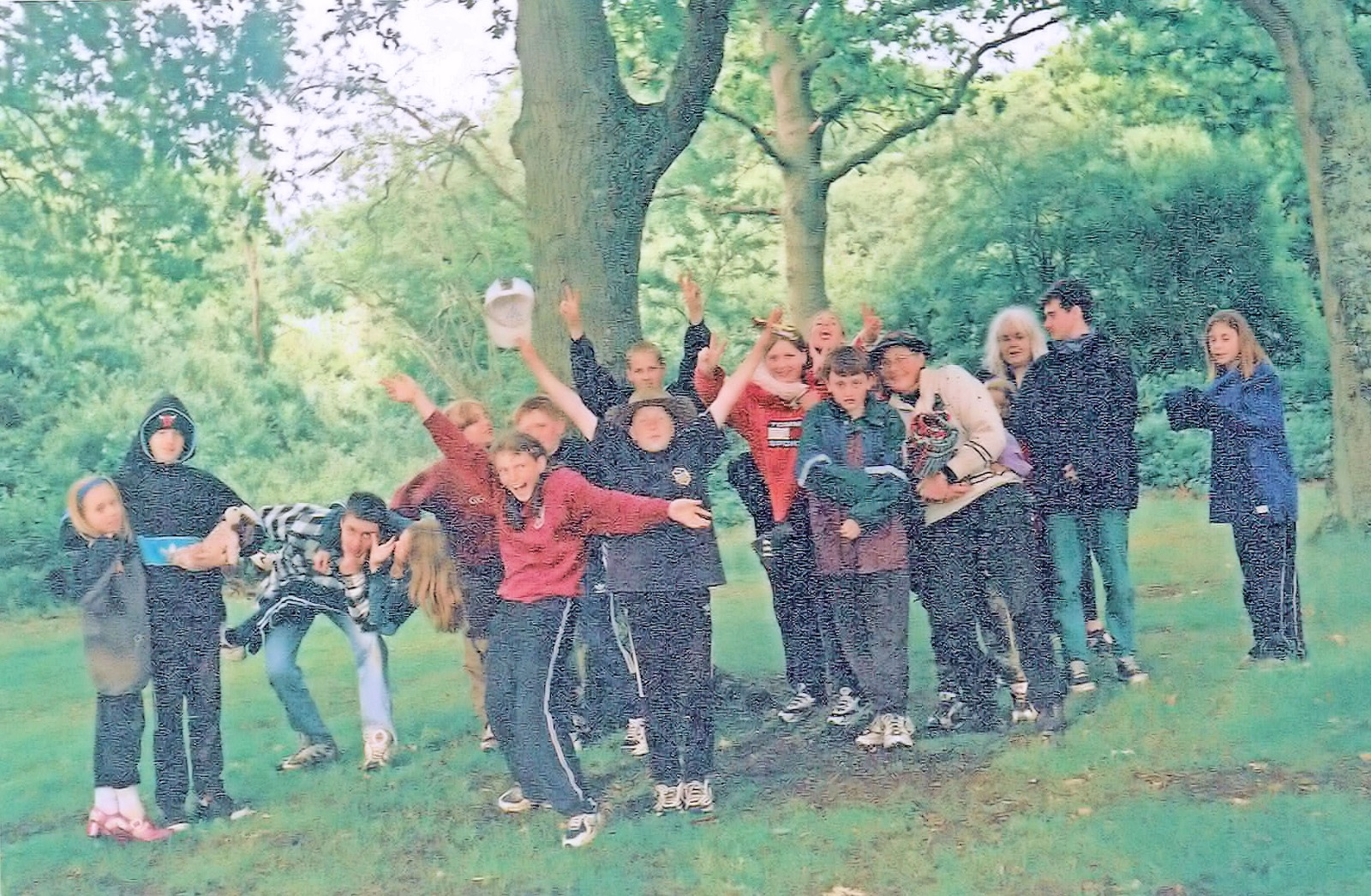
We got together with a wilderness skills expert and started a project we called ‘Little Turtle Island.’ It began with just a few children, but eventually built to 33 children, each of whom learned ancient wilderness skills and spirituality together.

We held a camp each year for the four years; and in the fourth year, we held a ‘rites of passage’ ceremony with four of the children.

Chuck Derby came over from Pipestone to Britain to teach them. Chuck came from the town of Pipestone, Minnesota, home to the quarry where the red stone for sacred pipe bowls comes from.


He was a wonderful man, and he will always be remembered. Sweat lodges and vision quests happened during that forth year, and I think, all in all, it changed the lives of many of the children who participated.


We are still friends, many of those children and I, we are still in touch, although they are parents with children of their own now.


As a sign of the lasting legacy of those times, the Isle of Wight is known as ‘Little Turtle Island’ with some of the Sisseton Dakota Sioux!


Chuck and his wife Gloria were always at the end of the phone, and his first ever journey away from his reservation was to visit the Isle of Wight, to marry Gloria, at The Longstone - an ancient monument on the island. It was a marriage ‘under the blanket’ [a traditional Native American marriage], mixed with a Celtic handfasting.

I don’t think I have ever witnessed more people gathered in one huge circle, as we did that sunny day. Chuck made a precious gift to me, for organising it all, a stunning piece of pipestone. That, and the making of my sacred pipe, my Channupa, changed my life in so many ways.


THE SACRED PIPESTONE

Chuck had his red pipestone quarry in the grounds of the Pipestone National Monument, the series of quarriers where the pipestone - Catlinite - has been taken from the ground in a sacred manner for hundreds of years.

All the stone from those native quarries is extracted by hand, and in ceremony, and it can take up to six months to extract a medium size slab. The stone and site is considered sacred, and it is an ancient tradition. 

Chuck was consistently warning visitors and white people on the dangers of accepting the ‘false stone’ (from the Internet) to make their pipes. On one visit I made there, Gloria and I went to see the quarry in the nearby township of Jasper, where the stone is hacked out with machines. We took a piece to have it analysed, only to find the stone was more quartzite than genuine Pipestone or Catlinite. There is no sacredness with this false stone. 

This ancient sacred stone can hold images gifted by Tunkashila. Chuck would call them ‘Wakan’ very sacred. The stone gifted to me from Chuck held such an image. The effigy of a small white pipe sits in the centre. Chuck told me this pipe is truly a Channupa for Little Turtle Island!

Please visit Chuck’s film:- Lakota/Dakota Traditons. Quarrying of the Sacred Red Pipestone.


On my last visit to Pipestone, I was able to attend the Sundance, the Pipestone Sundance, where the Channupa were gathered out on the Sundance grounds. I watched the sacred central Sundance tree being brought in and erected, and four days of honouring the men who danced. These are abiding, beautiful memories.

This Sundance was also honoured by the veterans, A.I.M’s Native Americans. It was so synchronistic that a few days before I had visited an incredibly important archaeological site on the border with Iowa. Within this site lay small standing stones and burials that indicated Celtic ancestors had been buried here on the site of the Oneida tribe. But it was being systematically abused by farmers in tractors digging up burial grounds right in front of our eyes!

So, I took the chance to talk with A.I.M’s leaders. And that helped to make the entire site a national park. (That was when Democrats ran the US!)


This was to be my last visit to Pipestone. When I had returned Chuck rang me up to give me the news that before my plane took off, during a 20-minute wait on the tarmac at Sioux Falls airport, he had seen a golden eagle circling above the plane. And when the plane finally made its way down the runway, that golden eagle flew with the plane… and me.

When Chuck told me that, I cried, as I remembered the name Ed had given many years before, and I felt I owned that name then;
Wambdi Olywampa Weya: Eagle Singing Moon.


These two wonderful Native Americans will stay in my heart forever.

Mitakuye Oyisin

Jan

Wambdi Olywampa Weya: Eagle Singing Moon


Jan Harper-Whale is a retired teacher, now author. She lives on the Isle Wight (Wihtland: Isle of Spirits). Her new book The Wihtwara is a rediscovery of forgotten history about the Ancestors of the island in the 1st-5th centuries A.D. She still teaches Native American spirituality.

www.the-wihtwara.co.uk

email: earth.trinity@googlemail.com


Eagle Man

Ed Mc Gaa, Eagle Man, was born on Pine Ridge Indian Reservation and was a Oglala Sioux lawyer, writer, and lecturer who introduced thousands to Native American spirituality, ceremonies and rituals.
He served in the US. Marines in Korea a fighter pilot, flying 110 combat missions, receiving eight Air Medals and two Crosses of Gallantry, and was recommended for a Distinguished Flying Cross.
His two best known books are : ‘Mother Earth Spirituality, Native American Paths to Healing Ourselves and Our World,’ Harper San Francisco, 1990. ‘Rainbow Tribe, Ordinary People Journeying on the Red Road,’ Harper San Francisco, 1992.
Ed McGaa passed into Spirit, aged 81, on August 25th 2017.

Please visit Ed’s film:- Lakota Traditions, Eagleman Ed McGaa.


Running Elk

Chuck Derby Running Elk was born in Pipestone, Minnesota in 1941 and continued to live there for the rest of his life. According to tradition, as the family's first-born son, he inherited the name Chaske. Which was mutated to Chuck or Charlie.
After high school, he worked in the construction industry, before he began working for the Pipestone National Monument in 1963. Many people thought of him as the caretaker of the quarries.
He was a sacred pipe maker for many decades, like his father and grandfather, and ancestors before him. He was a lifelong adherent to traditional Oglala values and had served on many Native American committees and boards - dealing with various things regarding historical and traditional Native American issues. This included him having to travel to Washington DC to testify to Congress on behalf of Native Americans about their relationship with the sacred pipe.
Through the years of working with pipestone and making ceremonial pipes Chuck became associated with many Native American elders, spiritual leaders and medicine men. Through these connections he learned many ancient cultural and spiritual teachings and was able to incorporate these traditions into his everyday life, just as his ancestors.
In his later years, Chuck concentrated on the educational aspects of quarrying, pipe making and cultural awareness. He presented a unique cultural educational program called ‘Beads and Buckskins’ in both the States and Europe with Gloria, his wife and working partner.
Chuck was also a longtime subscriber to Sacred Hoop Magazine.
In 2010 Chuck was diagnosed with pancreatic cancer and passed away in August of that year in his beloved Pipestone, surrounded by his wife, daughter, sisters, family and friends.

Gloria’s dedication to Chuck Derby Running Elk


On the eve of the anniversary of my beloved chuck’s passing, I thought I would again copy the honouring speech that the Pipestone Dakota Community did during the first PDC powwow in August 2000.

‘We would like to have this honour song done to recognise and acknowledge the hard work and effort that Chuck Derby has put into the powwow..

We honour Chuck because to us, he is our quiet warrior. He cares about the Pipestone Dakota Community. In his own quiet way, he deals with adversaries in a positive manner. He never criticizes others, he looks for the positive in everyone. To us, he has all the qualities of a true leader, and we appreciate everything he has done for the Indian Community and the wider non-Indian community. Through all the conflict and adversities that the Dakota community has been going through, Chuck has stood out in defence of us.

We have five words to describe Chuck.


C is for Caring

H is for Humble

U is for Unshakable

C is for Constant

K is for Knowledgeable


In his gentle, respectful and caring way, he watches over the Pipestone Dakota Community.

In closing, we would like to honour him and invite you to come out and shake hands with him and dance with us.

Before reading this testimonial, Roger Trudell,(Santee Sioux Tribal Spiritual leader,) spoke of his experience with Chuck during the many years he had known him. After reading the above testimonial he said that he agreed with everything that was said was true and that if anyone wanted to sit with Chuck for 5 or 10 minutes, they would also see that these things were true.

August 2019


Gloria Hazell-Derby.

Chuck is still missed by many people.

The void left in the world will never be filled


The pain felt will never be healed

Chuck, my wonderful husband, my heart, I miss you every day.